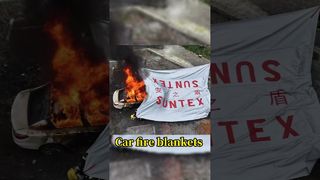
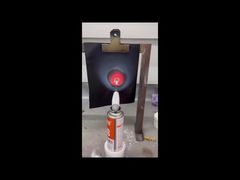
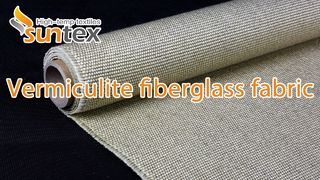
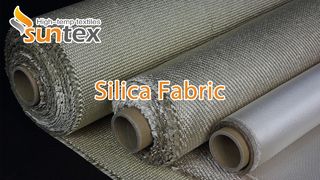
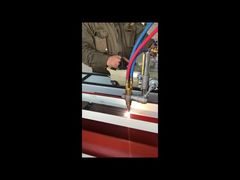
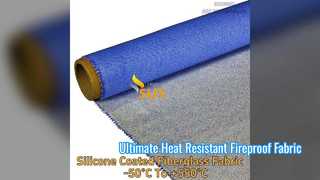
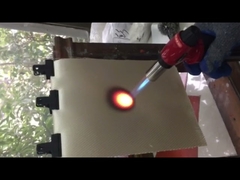
Brief: In this dynamic video, we showcase the exceptional properties and real-world applications of High Temperature Silica Coated Fiberglass Fabric. You'll see a detailed walkthrough of its high-temperature resistance, thermal insulation capabilities, and how it performs in demanding environments like aerospace and fire control systems. Learn how this fabric is cut, sewn, and fabricated for uses such as welding blankets, fire curtains, and protective garments.
Related Product Features:
High temperature resistance for long-term use at 1000°C and short-term up to 1500°C.
Excellent thermal insulation properties that reduce heat loss and increase efficiency.
Fire resistant and corrosion resistant, suitable for heavy-duty fire control systems.
Low thermal conductivity and low thermal shrinkage rate for stable performance.
Waterproof, chemical resistant, and weatherproof for diverse industrial conditions.
High strength and good anti-abrasion, ensuring durability and longevity.
Easy to cut, sew, and fabricate, allowing for custom applications and installations.
Asbestos-free and halogen-free, meeting safety and environmental standards.
Faqs:
What is the maximum working temperature for this silica fabric?
The fabric can be used continuously at temperatures up to 1000°C and can withstand short-term exposure up to 1500°C, with a softening point near 1700°C.
What are the common applications for high silica fabric?
It is widely used in expansion joints, fire curtains, welding blankets, removable insulation jackets, heat shielding, gaskets, protective garments, and other heavy-duty fire control systems across industries like aerospace, metallurgy, and chemical processing.
Is the silica fabric safe and environmentally friendly?
Yes, the fabric is asbestos-free and halogen-free, making it a safe choice for various applications while adhering to environmental and health standards.